3/21/2011


"Photographs of British Algae by Anna Atkins (1799-1871) is a landmark in the histories both of photography and of publishing: the first photographic work by a woman, and the first book produced entirely by photographic means."

"Atkins employed cyanotype to record all the specimens of algae found in the British Isles. The first part of her work, entitled British Algae: Cyanotype Impressions, appeared in 1843; by 1850 she had produced 12 additional parts. During the next three years, Atkins completed the publication with 389 captioned photograms and several pages of text, of which a dozen copies are known. In 1854, Atkins, possibly collaborating with her friend Anne Dixon, produced an album entitled Cyanotypes of British and Foreign Flowering Plants and Ferns. Despite the simplicity of her means, Atkins’s project was the first sustained effort to demonstrate that the medium of photography could be both scientifically useful and aesthetically pleasing."

Pictures from New York Public Library. Some text from here.

3/18/2011

3/17/2011


Two little finds yesterday - a book about Trans-Baikal and a collection of postcards.

3/10/2011


I wanted to stop making cropping disclaimers, but the next two were self-inflicted: the first just looked better that way, and I guess this is a reminder to myself to try and reshoot it, and the second one is a half-exposed film butt. Whoops.


3/08/2011

"During this time, all over the north-central Ohio counties that eventually shaped his legend, thriving cities and towns sprang up. The frontier had been swept away in 1812; now every acre was settled, even up into the marginal chestnut and oak groves along the ridges. Highways were everywhere, and by the time of John's last visits there were even canals and railroads. The cabins were falling into ruin or had already been replaced by up-to-date abodes of frame or brick. The real frontier - which, Frederick Jackson Turner once said, follows the hither edge of free land - had long since moved away from the cornland belt east of the Mississippi and had sent tongues of settlement far up the Missouri and the Platte into the foothills of the western mountains. The old first West, just over the Appalachians, that had been an absorbent for populations overflowing from the Atlantic coast when John Chapman paddled his pirogue down the Ohio, had grown into a political unit so powerful that it was beginning to change the meaning of democracy in America.

"People forgot, as they normally do with their heroes, that John Chapman had been no more of a fixed entity during this time than the land he lived on." (pg. 226-227)

"No particular place can adequately memorialize John Chapman, anyhow. Precisely defined spots in graveyards are for mere people, not for a man whose memory had become a working principle even before he died. Johnny Appleseed is no disconsolate ghost hanging around a forgotten burial site. He still strides up and down the St. Joseph above Fort Wayne, but now is staking out miles of parkway and trails to lead residents of a busy modern city into the open air where they may enjoy many acres of natural beauty at their front doors." (pg. 237)

"Similarly, Johnny has become the planter of all first orchards, not merely in the Middle West where the chances of his having supplied early seedlings are always good, but everywhere. Connecticut, Massachusetts, Vermont, New York, Pennsylvania, Maryland, Virginia, Kentucky, Tennessee, Missouri, Nebraska, Arkansas, Wisconsin, Iowa, the Rocky Mountain states and the Pacific coast have all claimed his labors. In the states where he really worked, scarcely a county is now without a tree or orchard said to be his. Similarly, all varieties of apples roll in his direction. The Rambo is said to have been his favorite. The Johnathan, the Chapman, the Baldwin, the Grimes Golden, the Ben Davis, and others have all been attributed to seedlings planted by him. It does not matter that not one of them can be traced authoritatively to his labors. In a sense he originated all new apples. He stands for everything good and progressive in American horticulture. Nurserymen now invoke the blessings of the Johnny Appleseed moon on their spring plantings and sing his praise during the fall harvest. He is the patron saint of the American orchards." (pg. 252-253)

From Johnny Appleseed: Man and Myth by Robert Price.

3/06/2011


Trevor Paglen, DMSP 5B/F4 from Pyramid Lake Indian Reservation (Military Meteorological Satellite; 1973-054A)

"By the middle of the nineteenth century, forty-niners had blazed a well known trail across a sliver of territory just north of the Mono Basic, but vast swaths of the surrounding deserts remained 'unexplored' (read: by white people). Well into the 1860s, maps depicted vast expanses of this desert as featureless 'unexplored regions'.

"Blank spots on the maps of the West were like the blank spots on other empires' maps, places where fantasy, imagination, possibility, violence, beauty, and horror fed off one another to create landscapes where anything seemed - and often was - possible. With the advent of industrialized mining, men learned to move mountains to extract almost unimaginable riches. In the process they laid waste to the land with a speed and totality as breathtaking as the train and telegraph's contemporaneous annihilation of space with time. The frontier was a space where old-world caste systems might be left behind and a man might become rich by simply being in the right place at the right time. This sense of possibility, of course, came with exceptional violence: fifty years before Conrad penned Heart of Darkness, Nevada newspapers openly advocated solving the 'Indian problem' by 'exterminating the whole race.'

"It is not a coincidence that these landscapes were also some of landscape photography's greatest proving grounds. 'Taming the west' meant bringing symbolic and strategic order to blank spots on maps through surveillance, imaging, and mapping. The patriarchs of western photography - Carleton Watkins, Eadweard Muybridge, Timothy O'Sullivan, and others - all played a part in asserting control over the landscapes they drew in to their cameras. [...]

"Timothy O'Sullivan's corpus is the most obvious intersection of frontier photography and the will to map. O'Sullivan shot much of his seminal images for the War Department on military surveys dedicated to 'the exploration of these unknown areas.' The Wheeler survey's mandate was typical: its main goal was 'reconnaissance' to 'obtain correct topographical knowledge of the country...and prepare accurate maps.' Its secondary goals included surveying 'the numbers, habits, and disposition of the Indians who live in this section,' and tellingly, 'the selection of such sites as may be of use for future military operations of occupation.' In a very real sense, then, O'Sullivan and the other western photographers were to the late nineteenth century what reconnaissance satellites are to the late twentieth and twenty-first centuries."

From Trevor Paglen's Art Forum article, Frontier Photography. The whole thing is here.


Trevor Paglen, Milstar 3 in Sagittarius (Inactive Communication and Targeting Satellite, USA 143)


Trevor Paglen, USA 193 Near Alioth (Code Name Unknown)

3/05/2011

3/02/2011

3/01/2011


Tanyth Berkeley, Deana


Tanyth Berkeley, Nikki


Tanyth Berkeley, Simona


Tanyth Berkeley, Emily

Tanyth Berkeley via ASX. Plus one two three interviews.


Some more of this.


Taking portraits because I'm no good at it. (...yet!)

These are cropped by Photoland, too. If it's not 6x7, it's cropped.

2/25/2011


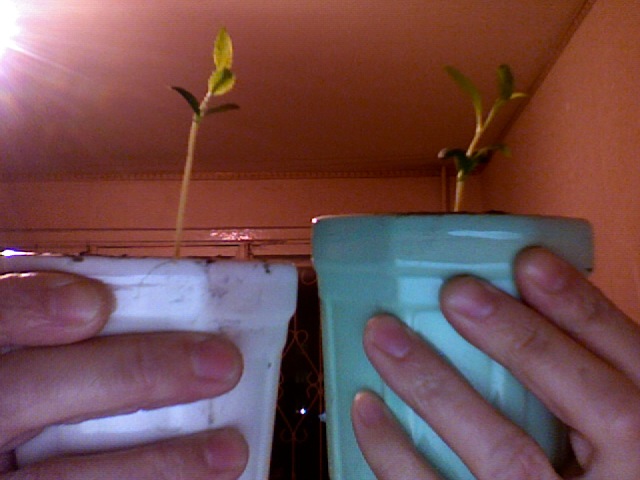
Wow. I've never jinxed something so pointedly before. I'm sorry, Little Tree.

2/20/2011


Progress.

2/19/2011


This one is worse, but it's more interesting...or is it? And it's exactly like the photo from the fall that I liked?


All these pictures were once horizontal 6x7s, but Photoland's scanner cropped the heck out of them. My film looks like it was manhandled by someone with Vaseline hands. If only there were another place within 100 miles that developed medium format film... Anyway I like these pictures so far even though they're not there yet. Maybe I'll make a calendar someday.

2/17/2011

"And when the builders laid the foundation of the temple of the Lord, the priests in their vestments came forward with trumpets, and the Levites, the sons of Asaph, with cymbals, to praise the Lord, according to the directions of David king of Israel. And they sang responsively, praising and giving thanks to the Lord,

'For he is good,
for his steadfast love endures forever toward Israel.'
  
And all the people shouted with a great shout when they praised the Lord, because the foundation of the house of the Lord was laid. But many of the priests and Levites and heads of fathers’ houses, old men who had seen the first house, wept with a loud voice when they saw the foundation of this house being laid, though many shouted aloud for joy, so that the people could not distinguish the sound of the joyful shout from the sound of the people’s weeping, for the people shouted with a great shout, and the sound was heard far away."

Ezra 3:10-13

2/14/2011

Ryo Kawanishi's photos from this January, together.

2/13/2011


Email attachments from home.

2/07/2011

http://www.googleartproject.com/museums/tate

Art and the Sublime room of Tate Britain.


Thomas Struth, The Felsenfeld/Gold Families, Philadelphia


Thomas Struth, The Okutsu Family in Western Room, Yamaguchi


Thomas Struth, The Falletti Family, Florence


Thomas Struth, The Richter Family 1, Köln

"Well first of all, in terms of an artistic practice, I can clearly only comment on something that exists, or that I encounter by direct experience. I think that my switch to photography from painting, for example, came about because I realized that I was more interested in working on things that resided out in the world, and were not restricted to my own psychological field. I realized I was more of a social and political person, and that I was more fascinated by analytical processes. It also bears saying that every part of my work reflects the position of a human being who actively takes part in life, which maybe sounds very banal and general to say expressly, but that is nonetheless what I’m interested in.

"In the beginning I was also interested in the relationship of the individual to the larger historical time span into which he’s born, and the responsibilities of what might be called one’s heritage. So, for instance, my specific experience at that time entailed an analysis of urban structures in the postwar German landscape, or the result of all that came after the Holocaust at that time, or more specifically, of being a witness to the emblematic structure of postwar German cities.

"This led to a curiosity about other places and other patterns of historical heritage, and then more or less by intuition or accident, to looking at another type of structure, that of the family. Those pictures were a starting point for an analysis of the social group, of the way individuals learn about the group dynamic or group activity. Because this family unit is the elementary social structure, it sets part of the patterns for how you behave in life, where you learn your first steps as a social being. Essential to the function of those pictures though is an understanding that they are only emblematic, that in making family portraits I was seeking something like an emblematic platform for a play of thought about something common, that we all share. Even if you look at the narratives of families as different as from, let's say, Ghana, Finland, Mongolia, or Germany, the fact of a family dynamic built through a history of generations is a shared experience."

Text from Gil Blank's interview of Thomas Struth, via ASX.