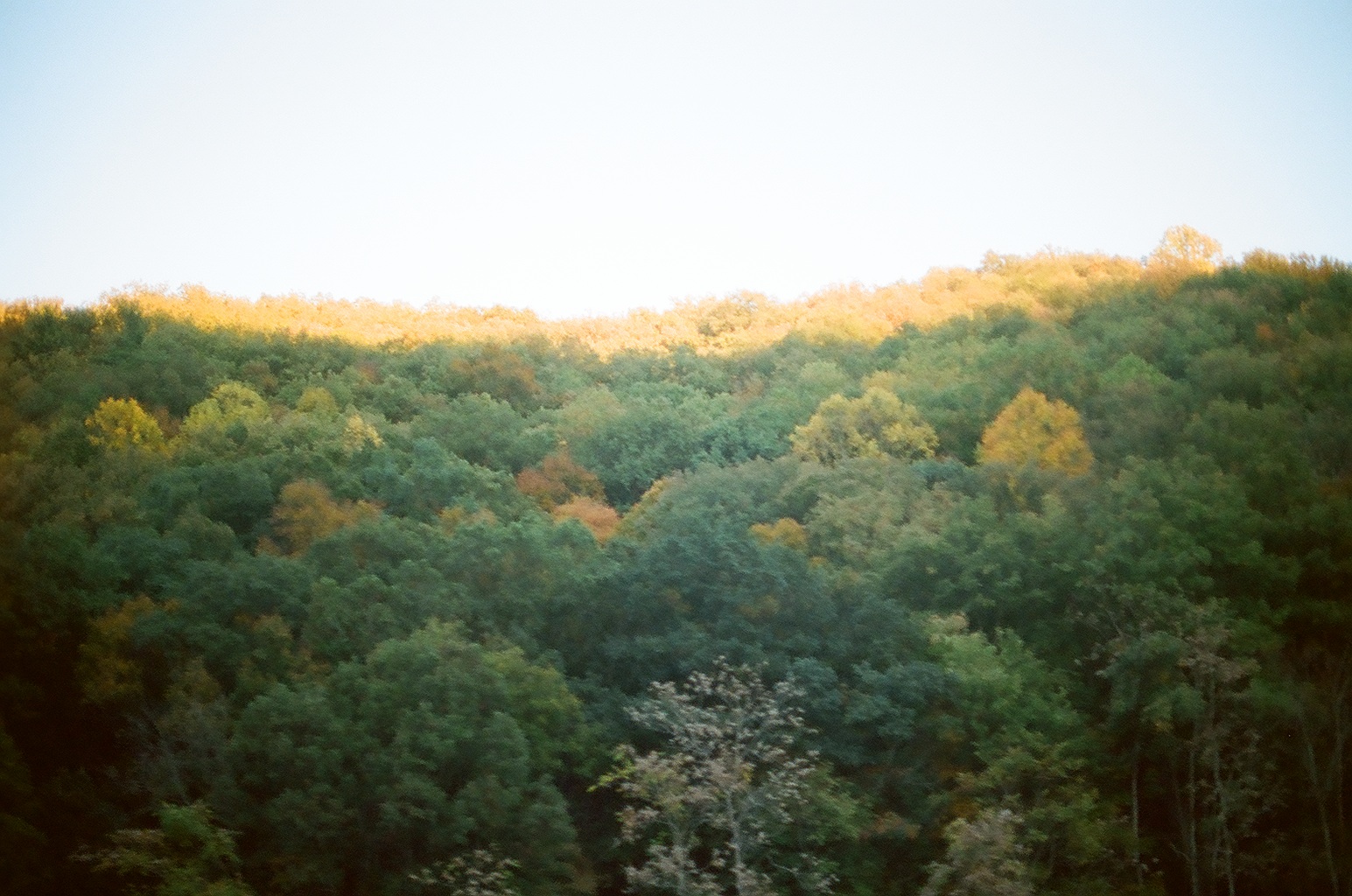
10/06/2012
10/01/2012
9/12/2012
"Every July I watch eagerly a certain country graveyard that I pass in driving to and from my farm. It is time for a prairie birthday, and in one corner of this graveyard lives a surviving celebrant of that once important event.
"It is an ordinary graveyard, bordered by the usual spruces and studded with the usual pink granite or white marble headstones, each with the usual Sunday bouquet of red or pink geraniums. It is extraordinary only in being triangular instead of square, and in harboring, within the sharp angle of its fence, a pin-point remnant of the native prairie on which the graveyard was established in the 1840's. Heretofore unreachable by scythe or mower, this yard-square relic of original Wisconsin gives birth, each July, to a man-high stalk of compass plant or cutleaf Silphium, spangled with saucer-sized yellow blooms resembling sunflowers. It is the sole remnant of this plant along this highway, and perhaps the sole remnant in the western half of our country. What a thousand acres of Silphiums looked like when they tickled the bellies of the buffalo is a question never again to be answered, and perhaps not even asked."
From Prairie Birthday, page 44-45 of A Sand County Almanac by Aldo Leopold. I love this book.
9/11/2012
The dusty road to Oksana's dacha, this July.
Living in the States now! There are over a hundred rolls of film in the fridge, which I'll be slowly developing. One day I'll make something out of this.
7/08/2012
4/23/2012
They did a show inspired by Brooks Hall! the site of my first art class at UVa and other adventures. Anyway I love everything about this.
Ruffin Hall sometime between February 24 and March 30
"Seeking a focus that combined diverse artistic styles, Burckhardt was inspired by U.Va.’s former natural history museum, which occupied the gallery of Brooks Hall from 1877 to 1940. The result is an installation called 'The Brooks Natural History Museum, c 1900: A Creative Interpretation.' The main attraction of the original Brooks Hall museum was a plaster model of a woolly mammoth, constructed by the naturalist Henry Ward. This artifact is the inspiration for the exhibit’s centerpiece, 'Wilma,' a full-size replica who gently shelters a bust of Ward between her cardboard tusks."
4/08/2012
instead of a picture
Today is Palm Sunday by the Orthodox calendar, except here it's called Pussy Willow Sunday because we don't have palm trees. People buy newly budded pussy willow branches and have them blessed by their priests and put them in their homes. I think it's so neat how the tradition of greeting Jesus with palm fronds gets translated into familiar plants so that we can feel that story on our skin. I went to the wooden chapel down the street this morning, and it was crammed full of people. I mean, I couldn't move at all, not even to cross myself, but somehow more and more people kept squeezing in. The woman next to me had on a soft, fuzzy hat which kept brushing against my face. People passed candles to the front to be lit. Once, the crowd parted to let out a lady who felt faint. I could barely hear what the priest was saying, and it reminded me of when the crowds came to hear Jesus, and he had to teach them from a boat while they stood on the shore because there were so many that they would have crushed him. I wonder if it was hard to hear his voice over the sound of the waves, and whether anyone got their feet wet because of people in the back pushing forward to hear. I wish I could have taken a photo of everyone's backs this morning, the pussy willow branches they held sticking out everywhere, red or brown or green bark with their furry silver buds, casting soft shadows on each other's coats.
4/04/2012
When the Ob River was dammed up in the 1950s to build the Berdsk Reservoir, much of the old city of Berdsk was submerged, and some villages, too. I've been working in Berdsk this year! Here are some maps. I found the first one here.
3/20/2012
I like Kevin Anchukaitis's posts on the NYTimes Scientist at Work blog about studying Guatemala's climate history through tree rings! Here's the first one.
"Andrew E. Douglass, the astronomer who founded dendrochronology, wrote, 'Through long ages past and with unbroken regularity, trees have jotted down a record at the close of each fading year — a memorandum as to how they passed the time.'"
3/12/2012
John James Audubon, Great-footed Hawk
John James Audubon, Wild Turkey
John James Audubon, Spotted Grous
From The Birds of America, 1827-1838. Lots more here.
2/21/2012
"Man is best defined not as a 'logical' but as a 'eucharistic' animal. He does not merely live in the world, think about it and use it, but he is capable of seeing the world as God's gift, as a sacrament of God's presence and a means of communion with him. So he is able to offer the world back to God in thanksgiving. 'Thine own from thine own we offer to thee, in all and for all' (The Liturgy of St John Chrysostom).
"Secondly, besides blessing and praising God for the world, man is also able to reshape and alter the world, and so to endue it with fresh meaning. In the worlds of Fr Dumitru Staniloae, 'Man puts the seal of his understanding and of his intelligent work onto creation...The world is not only a gift, but a task for man.' It is our calling to co-operate with God; we are, in St Paul's phrase, 'fellow-workers with God' (1 Cor. 3:9). Man is not just a logical and eucharistic animal, but he is also a creative animal: the fact that man is in God's image means that man is a creator after the image of God the Creator. This creative role he fulfills, not by brute force, but through the clarity of his spiritual vision; his vocation is not to dominate and exploit nature, but to transfigure and hallow it.
"In a variety of ways–through the cultivation of the earth, through craftsmanship, through the writing of books and the painting of ikons–man gives material things a voice and renders the creation articulate in praise of God. It is significant that the first task of the newly-created Adam was to give names to the animals (Gen. 2:19-20). The giving of names is in itself a creative act: until we have find a name for some object or experience, an 'inevitable word' to indicate its true character, we cannot begin to understand it and to make use of it. It is likewise significant that, when at the Eucharist we offer back to God the firstfruits of the earth, we offer them not in their original form but reshaped by the hand of man: we bring to the altar not sheaves of wheat but loaves of bread, not grapes but wine."
The Orthodox Way by Bishop Kallistos Ware (pages 53-54)
2/20/2012
11/26/2011
"What are the consequences of imposing human values on the natural world? The blight may seem evil to us, but the from the vantage point of the fungus, that other parasite we await might be considered equally evil.
"Perhaps, Frost is ultimately reminding us, our tendency to view nature in terms of our notions of good and bad, desirable and undesirable, can wreak its own kind of evil. Certainly the American chestnut would never have been pushed to the brink of extinction were it not for human agency. Humans introduced the chestnut blight. The tree's plight is a direct result of our visions of what our gardens, our personal Edens, should contain. It's a lesson to bear in mind as we press forward in efforts to redress the blight and restore our perfect tree." (page 128)
"Unfortunately, it's easy to overlook the change. Diseases and insects spread slowly. The losses they produce accumulate over time, without any obvious beginning or end. By the time the chestnut forests were gone, there were whole new generations who didn't know anything was missing. 'One of the penalties of an ecological education is that one lives alone in a world of wounds,' Leopold wrote. But in an era when there's talk of a widespread 'nature deficit disorder', how many of us have the expertise to recognize the wounds that are being inflicted? It's easy for someone like me, a city dweller with an untrained eye, to look out over a forest vista – as I did in Patrick County, Virginia – and naĂ¯vely be reassured by the rolling waves of green. That took place early in my research for this book, and at the time, I did not yet understand that the scene I was admiring was far from a picture of health. In just one example of the troubles now plaguing the southern Appalachian woods, the oak trees that filled the chestnut's place in the forests are themselves in the midst of a major die-back caused by a complicated disease complex known as oak decline. And as those oaks die, they are being replaced by trees like red maple that have even less value to wildlife. As one forest ecologist told me, 'When you have tree species after tree species disappearing, what worries me is there will still be trees and shrubs and people will think their forests are beautiful. But to those who knew what the forest once looked like, it will look like the ruins of an ancient civilization." (page 224)
From American Chestnut: The Life, Death, and Rebirth of a Perfect Tree by Susan Freinkel
11/21/2011
Shows like this make me excited to be alive!
The Great American Hall of Wonders at the Smithsonian American Art Museum
Seeing Is Knowing: The Universe at Carleton College's Perlman Teaching Museum
In the Company of Animals at The Morgan Library & Museum
The Great American Hall of Wonders at the Smithsonian American Art Museum
Seeing Is Knowing: The Universe at Carleton College's Perlman Teaching Museum
In the Company of Animals at The Morgan Library & Museum
11/06/2011
Remember my apple trees? A couple got nibbled by a cat, but the rest look happy thanks to Svyeta!
"You planted them, I watered them, and God grew them," she said.
11/04/2011
"Despite the repeated setbacks, Graves's enthusiasm for the project never faltered. Year after year, he filed dispatches from the field reporting on another hybrid 'new to science'. He'd describe each in lovingly rich language that reflected his appreciation for nature's stupendously varied palette. The Essate-Jap was 'reddish to Kaiser brown'. The Kelsey had 'burnt sienna bark' and twigs of 'light mineral grey'. The young Hamden's bark was a tint 'somewhere between buckthorn brown and Dresden brown'.
"'He never had a shadow of a doubt about the fact that he was going to bring back the chestnut,' recalled Richard Jayes . . ."
pages 99-100 of American Chestnut by Susan Freinkel
"'He never had a shadow of a doubt about the fact that he was going to bring back the chestnut,' recalled Richard Jayes . . ."
pages 99-100 of American Chestnut by Susan Freinkel
11/02/2011
10/13/2011
Hi, I just wanted to show that I have been taking pictures this summer and fall, but I don't have the money to develop these babies right now!
I'm leaving for Russia in a week. But I'm not letting Photoland touch my film again, so I probably won't develop any pictures I take there until I get back, either. So...get ready for this blog to explode come August.
10/02/2011
"But it was in Appalachia, in places like Patrick County, Virginia, where the ties between the chestnut and people were most tightly bound. 'If ever there was a place defined by a tree, it was Appalachia,' says folk historian Charlotte Ross, of Appalachian State University. The American chestnut 'was our icon. We loved that tree.'
"On the steep slopes and in the cool, moist hollows of the southern Appalachian mountains, chestnuts grew so abundantly that they accounted for as many as one in four forest trees, and in some places, even more. Chestnuts were big trees everywhere, but this land gave rise to giants – trees a dozen feet wide and ten times as tall. One Goliath in Francis Cove, North Carolina, measured seventeen feet across. In spring, the trees bloomed long bushy catkins of cream-colored flowers that filled the woods with a pungent perfume and made the forests look, from a distance, 'like a sea with white combers plowing across its surface,' as the naturalist Donal Culross Peattie wrote." (pages 17-18)
"No one needed to buy land to pasture cattle or hogs when the forests supplied such a wealth of forage. Farmers would simply notch their mark in the ears of their livestock and turn the animals loose to roam the woods until they were to be butchered or sold. A pig could grow stout as a barrel on chestnuts, acorns, and hickory nuts. That ample carpet of nuts, sometimes inches thick, allowed drovers to move huge herds of hogs, cattle, and even turkeys across the slopes of the southern mountains to supply food for laborers on the plantations to the Southeast. The wildlife that also feasted on the nuts ensured a steady supply of game for the dinner table. 'There wasn't no kind of game that roamed these mountains that didn't eat the chestnuts,' Georgia native Jake Waldroop recalled.' The chestnuts supported everything.
"Folklorist Ross believes the chestnut not only supported settlement in the Appalachians but invited it. The early Scots-Irish settlers wrote letters home describing the riches the woods offered. 'The chestnut mast is knee-deep,' one man boasted, referring to the heavy accumulation of nuts. 'C'mon over cousin,' another wrote to his family in Ulster, Ireland. 'This is the best poor man's country.' And their countrymen followed. Over time the mountains filled with enclaves of tough, independent-minded people who were used to wrestling a living out of the poorest farmland." (pages 19- 20)
From American Chestnut: The Life, Death, and Rebirth of a Perfect Tree by Susan Freinkel
9/09/2011
"He only saw the river, shimmering reddish yellow, and bounded into it with his shoes and his coat on and took a gulp. He swallowed some and spit the rest out and then he stood there in water up to his chest and looked around him. The sky was a clear pale blue, all in one piece—except for the hole the sun made—and fringed around the bottom with treetops. His coat floated to the surface and surrounded him like a strange gay lily pad and he stood grinning in the sun. He intended not to fool with preachers any more but to Baptize himself and to keep on going this time until he found the Kingdom of Christ in the river. He didn’t mean to waste any more time. He put his head under the water at once and pushed forward.
"In a second he began to gasp and sputter and his head reappeared on the surface; he started under again and the same thing happened. The river wouldn’t have him. He tried again and came up, choking. This was the way it had been when the preacher held him under—he had had to fight with something that pushed him back in the face. He stopped and thought suddenly: it’s another joke, it’s just another joke! He thought how far he had come for nothing and he began to hit and splash and kick the filthy river. His feet were already treading on nothing. He gave one low cry of pain and indignation. Then he heard a shout and turned his head and saw something like a giant pig bounding after him, shaking a red and white club and shouting. He plunged under once and this time, the waiting current caught him like a long gentle hand and pulled him swiftly forward and down. For an instant he was overcome with surprise: then since he was moving quickly and knew that he was getting somewhere, all his fury and fear left him."
From "The River" by Flannery O'Connor
Subscribe to:
Posts (Atom)