7/13/2013
6/30/2013
"Abba Lot went to see Abba Joseph and said: Abba, as much as I am able I practice a small rule, a little fasting, some prayer and meditation, and remain quiet, and as much as possible I keep my thoughts clean. What else should I do? Then the old man stood up and stretched out his hands toward heaven, and his fingers became like ten torches of flame. And he said: If you wish, you can become all flame."
From Desert Wisdom: Sayings From the Desert Fathers, translated by Yushi Nomura.
6/11/2013
My dad's dad on a reel from 1939 at the Boyd Museum in Wytheville. (And the kid with the toy revolver is my great-uncle Freddy.)
6/09/2013
“After many months of comparing and sorting our enthusiasms, we sifted through our shopping bags of Xeroxed material to see what we had. What emerged was not so much the prominence of certain recurring ideas and themes, or even patterns of emotions and attitudes evoked by a contemplation of what Thoreau calls 'the unhandseled globe.' Rather, we were reminded of the English biologist J.S.B. Haldane’s remark when asked what he could say about the personality of God on the basis of his evolutionary studies. He replied that the Creator seems to have had 'an inordinate fondness for beetles.'
“Reading this anthology one might reach the conclusion that nature writers have an inordinate fondness for snakes, turtles, rivers, farm fields, the moon, night, rain, spring, sex, ants, and the nasty habits of insects in general. Birds, on the other hand, though well-represented, are not as prevalent as one might have expected, and fish are virtually ignored. Some geographical areas–the Rocky Mountains, the deserts of the American Southwest, East Africa, the south of England, Cape Cod–receive much attention. Others, such as the Southeastern states (with the important exception of William Bartram’s Travels) are inexplicably under-represented, and still others, Antarctica, for instance, have yet to find their celebrants. Such disparities may, of course, be simply a matter of editorial bias and of historical and cultural circumstance. On the other hand, one is tempted to ask if there may be organisms and locales for which the naturalist imagination has innate affinities. As Barry Lopez speculates when observing the lack of narwhals in Eskimo mythology, are there some animals that are ‘good to imagine’ and others that are not? Or as E.O. Wilson asks in his book Biophilia, do human beings instinctively gravitate toward a certain kind of landscape–what he calls ‘the right place’?”
From the introduction to Norton's Book of Nature Writing.
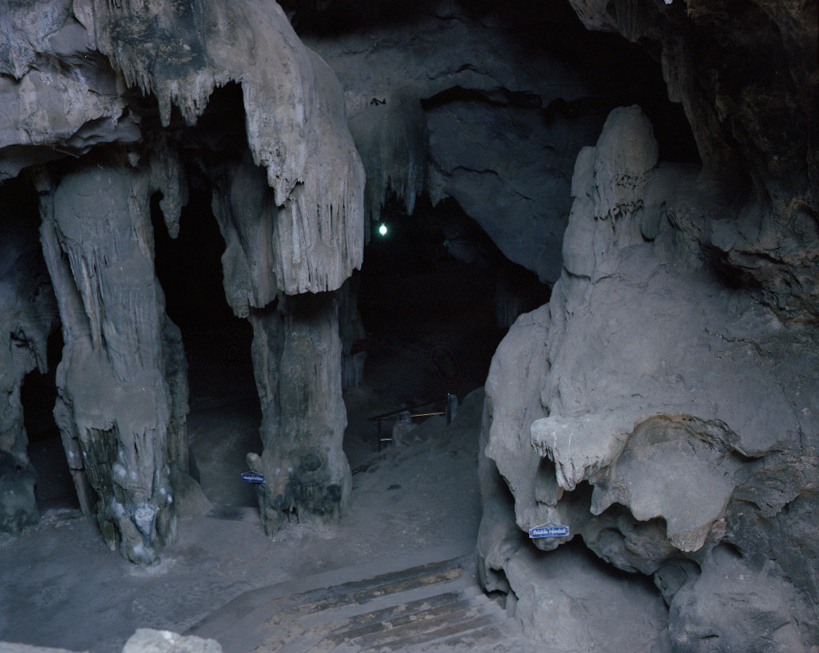
“Reading this anthology one might reach the conclusion that nature writers have an inordinate fondness for snakes, turtles, rivers, farm fields, the moon, night, rain, spring, sex, ants, and the nasty habits of insects in general. Birds, on the other hand, though well-represented, are not as prevalent as one might have expected, and fish are virtually ignored. Some geographical areas–the Rocky Mountains, the deserts of the American Southwest, East Africa, the south of England, Cape Cod–receive much attention. Others, such as the Southeastern states (with the important exception of William Bartram’s Travels) are inexplicably under-represented, and still others, Antarctica, for instance, have yet to find their celebrants. Such disparities may, of course, be simply a matter of editorial bias and of historical and cultural circumstance. On the other hand, one is tempted to ask if there may be organisms and locales for which the naturalist imagination has innate affinities. As Barry Lopez speculates when observing the lack of narwhals in Eskimo mythology, are there some animals that are ‘good to imagine’ and others that are not? Or as E.O. Wilson asks in his book Biophilia, do human beings instinctively gravitate toward a certain kind of landscape–what he calls ‘the right place’?”
From the introduction to Norton's Book of Nature Writing.
5/29/2013

Mushrooms From the Forest by Takashi Homma.
"The earthquake and subsequent tsunami of March 11th, 2011, near Japan’s Tohoku region, led to the catastrophic equipment failures and nuclear disaster of the Fukushima Daiichi Nuclear Power Station. Six months later, on September 15th, the Japanese government prohibited the gathering and ingestion of any mushrooms grown in the forty-three cities of Fukushima prefecture. Traces of radiation exceeding safety limits were detected in some wild mushroom varieties. Fungi inherently absorb radiation much more rapidly than other organisms. My Geiger counter detected a greatly elevated level of radiation in the lush forests of Fukushima when compared to the region’s urban areas. The wild mushrooms in the photographs assembled here are from those forests."
Subscribe to:
Posts (Atom)


